In To R How Or
Which Characteristic In R Which Datascience Made Easy
R does this by default, but you have an extra argument to the data. frame function that can avoid this — namely, the argument stringsasfactors. in the employ. data example, you can prevent the transformation to a factor of the employee variable by using the following code: > appoint. statistics There is an less complicated way to apply if…else declaration in particular for vectors in r programming. you could use ifelse feature as an alternative; the vector equivalent shape of the if…else announcement. take a look at out these associated examples:. In r, the replicate function makes this very simple. the first argument to duplicate is the quantity of samples you need, and the second argument is an expression (now not a function call or definition! ) with a purpose to generate one of the samples you want. In this academic we will have a examine how you could write a simple for loop in r. it is aimed at novices, and if you’re now not but acquainted with the fundamental syntax of the r language we advocate you to first have a look at this introductory r tutorial.. conceptually, a loop is a manner to copy a chain of instructions below positive conditions. In earlier r variations, istrue Considering that r is information platform, it has a alternatively whole set of mathematics operators, so you can use r as a fancy calculator if the want arises. a way to use primary operators in r most of the simple arithmetic operators are very acquainted to programmers (and anyone else who studied math in faculty). operator description Operators. r's binary and logical operators will look very acquainted to programmers. word that binary operators paintings on vectors and matrices as well as scalars. Which function in r which which function in r, returns the indices of the logical object when it is true. in other words, which function in r returns the position of value when it satisfies the specified condition. syntax of which function in r: which(x, arr. ind = false). What is r list? r list is the object which contains elements of different types like strings, numbers, in to r how or vectors and another list inside it. r list can also contain a matrix or a function as its elements. Operators. r's binary and logical operators will look very familiar to programmers. note that binary operators work on vectors and matrices as well as scalars. Inside the r-mission. org documentation, tilde ~ starts getting cited in chapter 11 whilst the dialogue of “statistical models” begins. so right away, one may want to glean that the ~ is used whilst seeking to explicit a statistical model. R has several operators to carry out duties consisting of mathematics, logical and bitwise operations. in this newsletter, you will learn about distinctive r operators with the help of examples. R-bloggers. com offers every day e-mail updates approximately r news and tutorials about studying r and many different topics. click right here in case you're seeking to put up or discover an r/data-science job. want to percentage your content on r-bloggers? click here when you have a weblog, or here in case you don't. It worked! we will cowl precisely what's occurring here in extra detail, but first let's briefly evaluation how r works with logical and relational operators, and how we are able to use the ones to effectively filter in r. a quick apart on logical and relational operators in r and dplyr. in dplyr, clear out takes in 2 arguments: the dataframe you're operating on. Take input and print in r the R operators an operator is a symbol that tells the compiler to carry out precise mathematical or logical manipulations. r language is rich in to r how or in integrated operators and gives. %in% operator in r, is used to become aware of if an detail belongs to a vector. example of %in% operator in r and instance of %in% operator in r for data frame. See? "&": the unmarried model does elementwise comparisons (for when you are doing logical operations on vectors of the same period, e. g. if for your example x<-c(1. 5,3. 5). the other one works just like c++'s or java's &&: it only looks at the first element of each vector (this is typically an unexpected downside), but in a typically better performing way: it looks from left to right, and as. A categorical variable v1 in a data frame d1 can have values represented by the letters from a to z. i want to create a subset d2, which excludes some values, say, b, n and t. basically, i want a c. Andrie de vries is a leading r expert and business services director for revolution analytics. with over 20 years of experience, he provides consulting and training services in the use of r. joris meys is a statistician, r programmer and r lecturer with the faculty of bio-engineering at the university of ghent. See more videos for how to or in r. In earlier r variations, istrue R Logical Operators
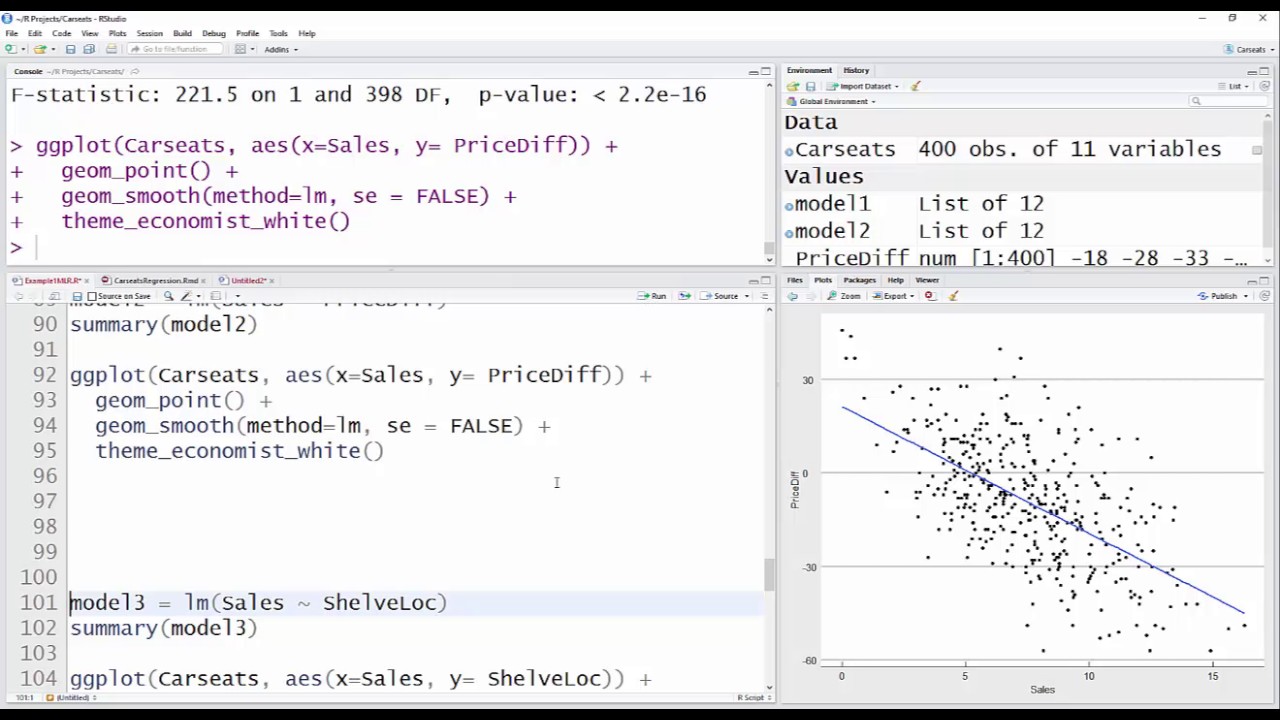
The Use Of Andor Operators In R Go Demonstrated
R Operators Arithmetic Relational Logical And More


Komentar
Posting Komentar